Everyone loves a comeback. Recently, the restaurant world feels full of them. |
|
|
|
There’s not a lot of German food in my hometown of Santa Barbara, a beach town better known for its abalone, taquerias, and proximity to the birthplace of ranch dressing. This is why I’ve been so intrigued by the various incarnations of our oldest German restaurant, the Dutch Garden; when it first opened in 1925, it was a counter-service spot called Poppy Cafe; then, in 1945, it rebranded as the Dutch Garden, despite serving German food, to distance itself from Germany in post-World War II years, and when it announced its closure in 2020 with the owner’s retirement, I figured that it had tenderized its last pork schnitzel after a long, applaudable run. But just two years later, the restaurant reopened. The new owners also retained its most beloved elements, from the kitsch gnome decor to the sausage lunch plates.
The Dutch Garden’s resuscitation is a small-town example of what feels like a rising trend in the dining world: the revival of once-defunct, decades-old bars and restaurants.
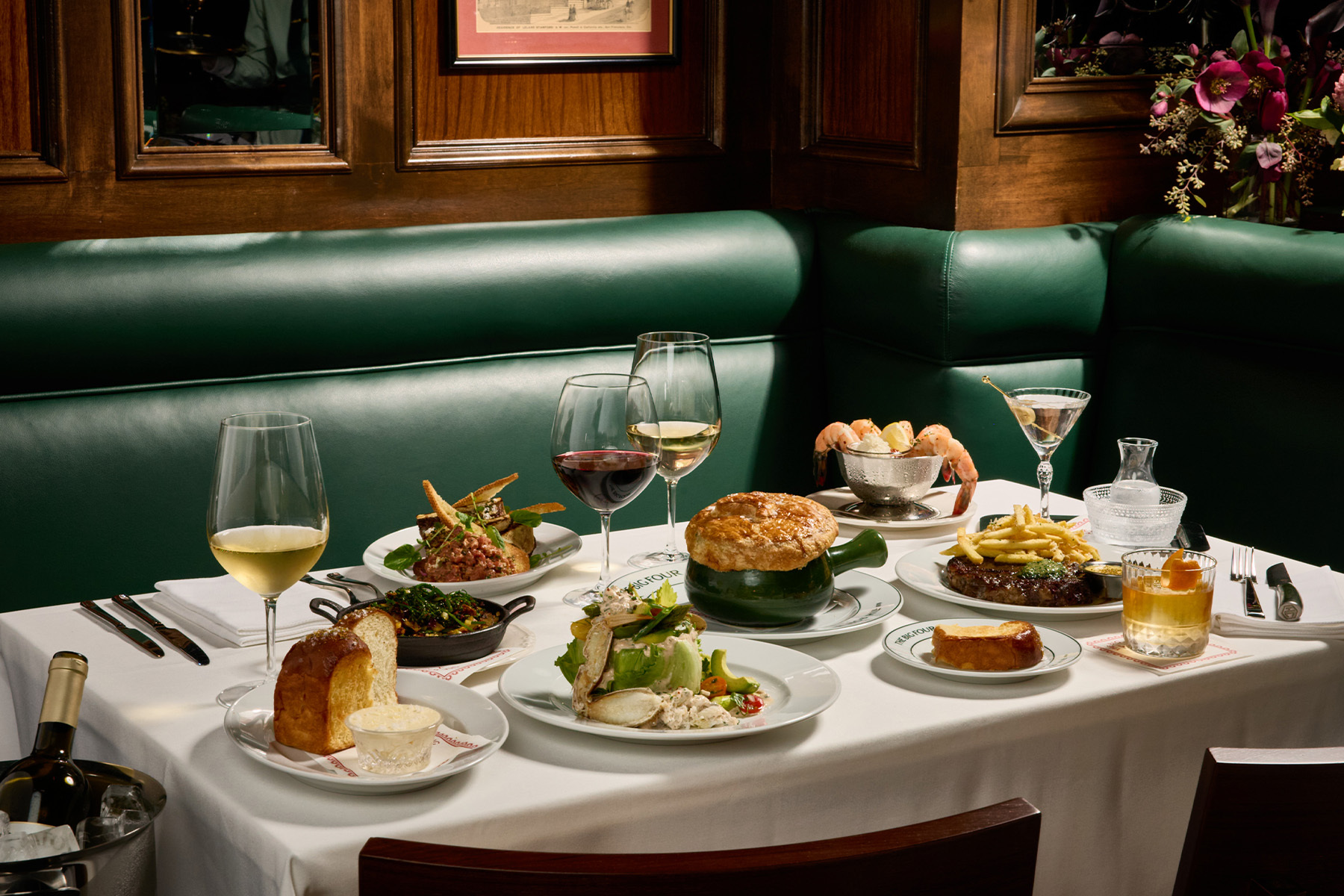
Last year, Eater reported on the opening of Lundy Bros. in NYC, a reincarnation of a historic 1920s Sheepshead Bay seafood hall in Brooklyn. The new Lundy Bros is on a different part of a waterfront and has only a fraction of the seats of the original, but “the dining room and the menu serve as a portal to an earlier time in the way that the best of this city’s classic restaurants do.” Across the country in San Francisco, the Big Four reopened this spring inside the Huntington Hotel with a luxurious interior redesign by Ken Fulk. The posh restaurant is named after four 19th-century railroad tycoons (the vibe: Champagne and tomahawk steaks); its previous form had first opened in 1976 before closing in 2020. Today, its patrons are tech and finance executives. The Victorian-era Brooklyn restaurant Gage & Tollner, which was open for over a century, closed for 17 years before reopening post-COVID with period-appropriate embellishments to its old-world charm, and nods to its heritage such as a towering baked Alaska. And in Manhattan, the cult-fave Italian restaurant Babbo, which first opened in 1998 and eventually closed in 2025, reopened the following fall under the new stewardship of restaurateur Stephen Starr and chef Mark Ladner, the latter of whom has earned high praise for his past work at two-Michelin-starred Del Posto in NYC, which itself closed in 2021 after over 15 years of operation.
|
|
|
|
The Big Four. Photo Credit: Brooke Fitts |
|
|
|
So, why all the fixation on restaurants of yore instead of going with new concepts? In the post-COVID-lockdowns era, as we finally have more clarity on what was truly lost, we may be realizing that some closures were purely circumstantial, if not premature. Plus, customers’ tastes still wax nostalgic for restaurants that have stood the test of time, from the coconut shrimp at Duke’s, which recently reopened after closing during the 2025 LA fires, to the beef cheek ravioli at Babbo. Reviving a long-running restaurant also brings an already-established, often generational customer base of former devotees. That isn’t to say diners won’t bring healthy skepticism to new chefs or new management, but it feels good to root for a restaurant that we, or at least our parents, have already loved.
Still, even that isn’t enough to guarantee success: In McMinnville, Oregon, the award-winning, 49-year-old restaurant Nick’s Italian Cafe closed in 2023, reopened a year later under new ownership, and abruptly closed for good last month. It’s a reminder that even a brief closure can lead to permanent shuttering in the fickle hospitality business (RIP Pitt’s).
These cult classic restaurants aren’t reinventing the wheel, but they’re reinventing themselves just enough, whether it be via new menus or interior upgrades, to hopefully adapt in what often feels like a murky, risky industry. As dining out becomes more expensive, reincarnating classic spots seems like a safe(r), steadier bet, as evidenced by the recent steakhouse revival and the tavern-ification of new restaurants.
Yes, big swings and shiny, new restaurant concepts can sometimes still pay off — but in this economy, nostalgia is one hell of a seasoning. |
|
|
|
-
Mirrored ceilings, vinyl spinning, and decor nods to Keith Haring — the ’80s are back at these newly opened New York City restaurants.
-
First, Heinz capitalized on its viral FIFA condiment moment with a tongue-in-cheek ad campaign, and now it’s tapping into the clear bag stadium concert discourse with a giant, transparent ketchup bottle purse.
-
Is the best pizza really in Los Angeles? Filmmaker Peter Ferriero’s new documentary, The Best Pizza Is in LA, pits LA against NYC as the best city for a slice, and features appearances from the likes of Nancy Silverton, Stephanie Izard, and (in a very LA move) Tori Spelling, among others. I’m always happy to watch pizza lovers talk shop, but agree with food writer Khushbu Shah’s take in her newsletter Tap Is Fine! that the constant comparisons of LA’s and NYC’s food scenes feels off base. Why not, as she suggests, compare London and NYC (two dense cities with more similar weather), or LA and Houston (driving cities with warm climates)?
-
I know where I’m spending next Saturday night: Actress Patricia Clarkson was recently a guest on the Netflix podcast Shut Up Evan, where she talked about her love of popping into the historic Greenwich Village gay bar Julius’ (“It’s a beautiful place. And it’s fun”).
|
|
|
|
|