| |
| An EGFR triple mutation and Osimertinib-resistant NSCLC PDX model |
| |
| |
Advanced lung cancer of late stage patients with EGFR mutation is selectively sensitive to available targeted therapeutics and often develop resistance to the target drug treatment, thus, the patient-derived xenograft (PDX) models are critical to evaluate drug sensitivity and resistance. We applied CD45 magnet beads or microfluidic device to enrich the tumor cell population from pleural effusion specimens of advanced lung cancer. Valuable novel drug-resistant PDX models were successfully established from both pleural effusion and biopsy tissues. With these efforts, we have established 86 lung cancer PDX models out of total >1000 cancer PDX models. Here we report PDX models with TKI drug-associated EGFR mutations (L858R, T790M, Exon19del, C797S), particularly a clinically nature-occurred AZD9291-resistant EGFR triple mutant (Ex19del, T790M, C797S) PDX model, LD1-0025-200717, which is valuable to evaluate developing 4-th generation TKIs. In conclusion, these precious drug-resistant PDX models from patients treated with recent generation drugs provide valuable starting points in looking for and evaluating new drugs of the next generations or ones with totally new mechanisms.
|
| |
| Clinical information |
| |
Basic Information
• Gender: Man
• Age: 54
• Clinical Pathology: Left upper lung primary bronchogenic carcinoma, adenocarcinoma;
sc-T2aN2M1b, stage IV;
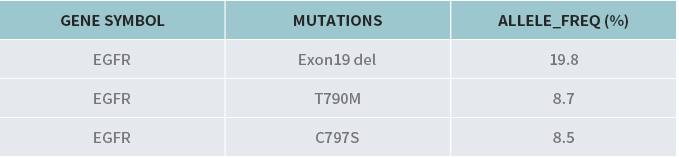
• Clinical NGS data: EGFR Ex19∆ 20%, T790M 9%, C797S 9%.
|
| |
| |
| Treatment history for LD1-0025-200717 |
| |
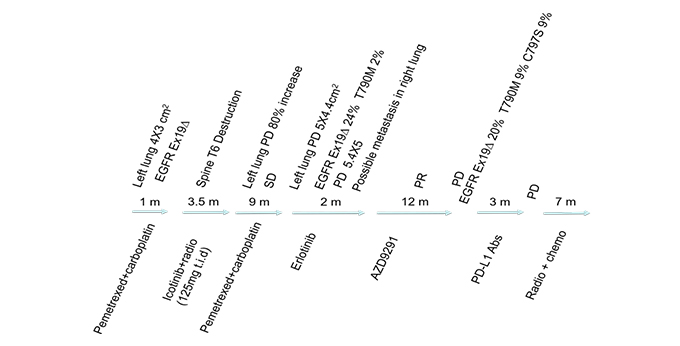 |
The patients was EGFR Ex19∆, treated with erlotinib, became Ex19∆ T790M, treated with osimertinib, became resistant by acquiring the 3rd mutation C797S
|
| PDX model information |
PDX model Pathology
• Gender: Man
• Age: 54
• PDX model Pathology
Poorly - Moderately differentiated adenocarcinoma
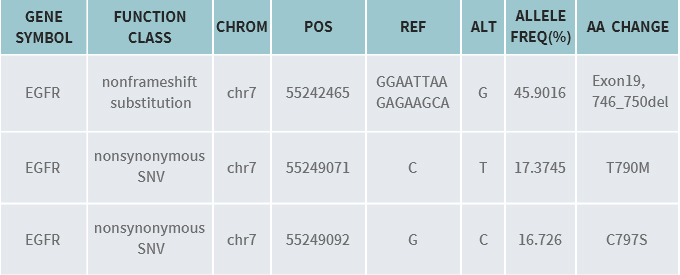
• PDX model NGS data: EGFR Ex19∆ 45.9%, T790M 17.37%, C797S 16.73% |
| |
| |
| PDX model Pathology |
| LD1-0025-200717 : Moderately differentiated adenocarcinoma |
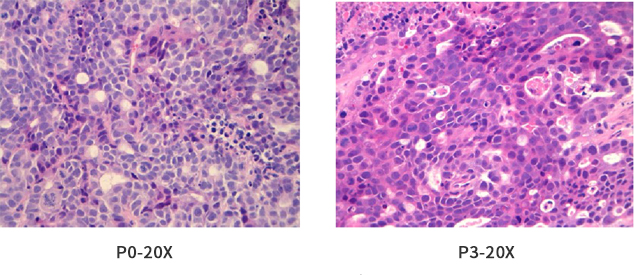 |
Passage: P3-P7 generation; P7 generation model has been revived;
PDX model NGS data : EGFR Ex19∆ 45.9%, T790M 17.37%, C797S 16.73%.
|
| |
| |
| PDX model Pathology |
 |
| AZD9291 treatment |
 |
| |
| |
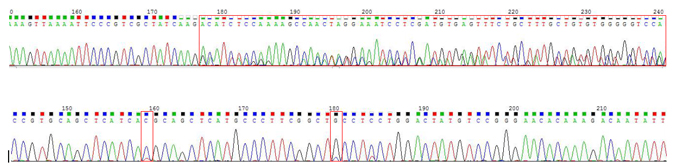
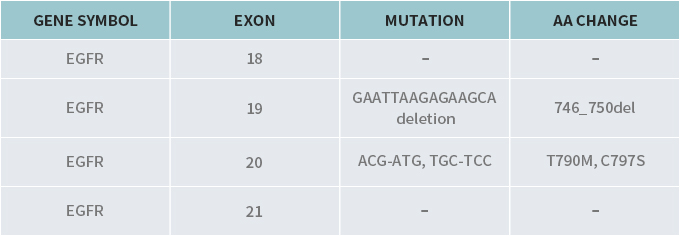
| EGFR mutations status of the PDX (P1, NGS) |
| WES |
 |
| RNAseq |
 |
| |
| |
| EGFR mutations status of the PDX (P1, NGS) |
 |
| |
 |
| |
| Efficacy study in LD1-0025-200717 |
| |
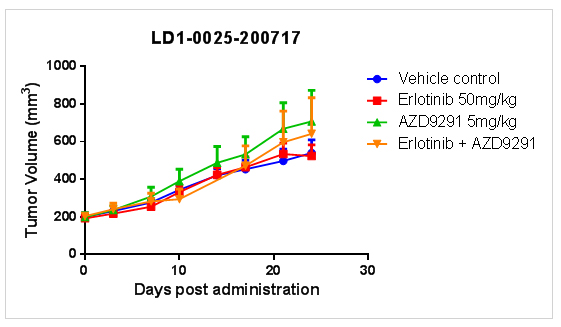 |
A. EGFR triple mutant (Ex19del, T790M, C797S) model LD1-0025-200717 was resistant to Erlotinib and AZD9291, and also resistant to Erlotinib+ AZD9291.
|
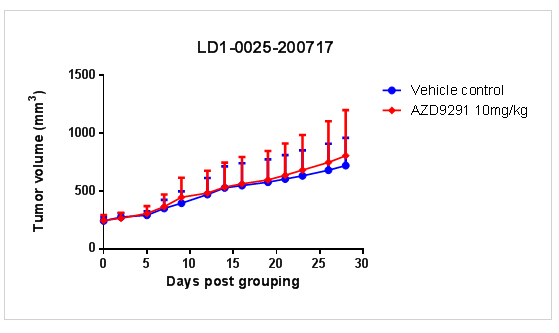 |
B. LD1-0025-200717 was resistant to higher dose of AZD9291.
|
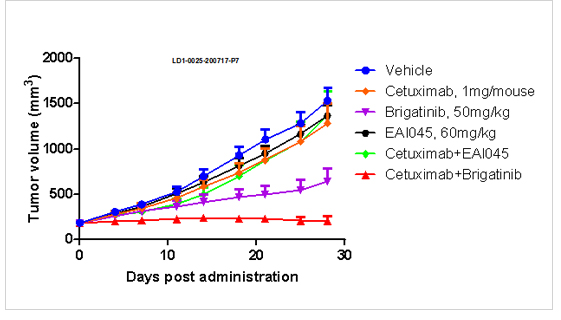 |
EGFR triple mutant (Ex19del, T790M, C797S) model LD1-0025-200717 was resistant to Cetuximab and EAI045, and also resistant to Cetuximab + EAI045. And this model is sensitive to Brigatinib, Brigatinib + Cetuximab Combo can reverse drug resistance of the EGFR triple Mutant PDX model.
|
| |
| EGFR mutant lung cancer PDX matching cell lines |
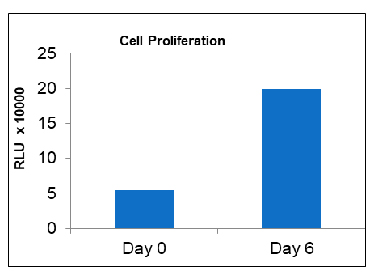
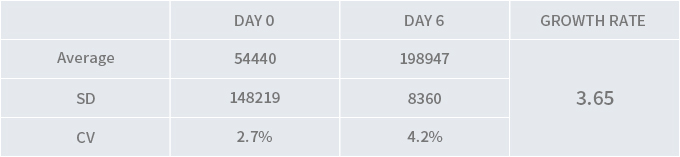
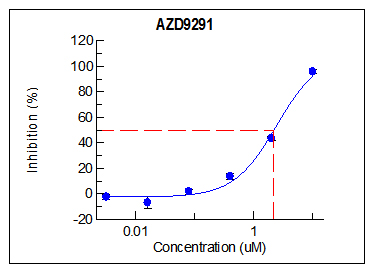
| LD1-0025-200717 cell (EGFR 19del/T790M/C797S) |
| |
 |
 |
| |
 |
| |
 |
| |
| An Assembly of Lung PDX Models with EGFR Mutations |
| |
 |
| |
 |
|
 |
400-821-0176 |
 |
services@lidebiotech.com |
 |
3F, Building 77-78, 887 Zuchongzhi Road, Zhangjiang Hi-Tech Park, Pudong New Area, Shanghai, China, 201203.
|
|
|
| |
Get more clinical information,click on the URL below.
 http://www.lidebiotech.com/ http://www.lidebiotech.com/ |
| |
| About LIDE |
Shanghai LIDE Biotechnology Co., Ltd. ("Shanghai LIDE"), is committed to translational medicine and precision medical research of cancer, provide drug treatment guides to physicians, and proposing personalized treatment plans. The company owns AAALAC accredited SPF level animal centers and world-class equipment. Shanghai LIDE has two wholly-owned subsidiaries, "Xi'an LIDE Biotechnology Co., Ltd." and "Shanghai LIWEN Diagnostics Co., Ltd." (hereinafter referred to as "Shanghai LIWEN") both with qualification of clinical testing laboratory.
|