Adam Glanzman/Bloomberg via Getty Images |
|
|
|
In today’s edition, we run down the biggest headlines of the afternoon, reconsider the etiquette of lateness, and contemplate a world without flu. Have thoughts or feelings on what you read here? You can reach me directly by email. I’m at [email protected]. |
|
|
|
|
Caitlin Dewey, senior writer | |
|
|
|
Caitlin Dewey, senior writer |
|
|
|
The Food and Drug Administration approved Moderna’s mRNA flu vaccine this week — a major public health breakthrough for an administration that’s been troublingly down on vaccines.
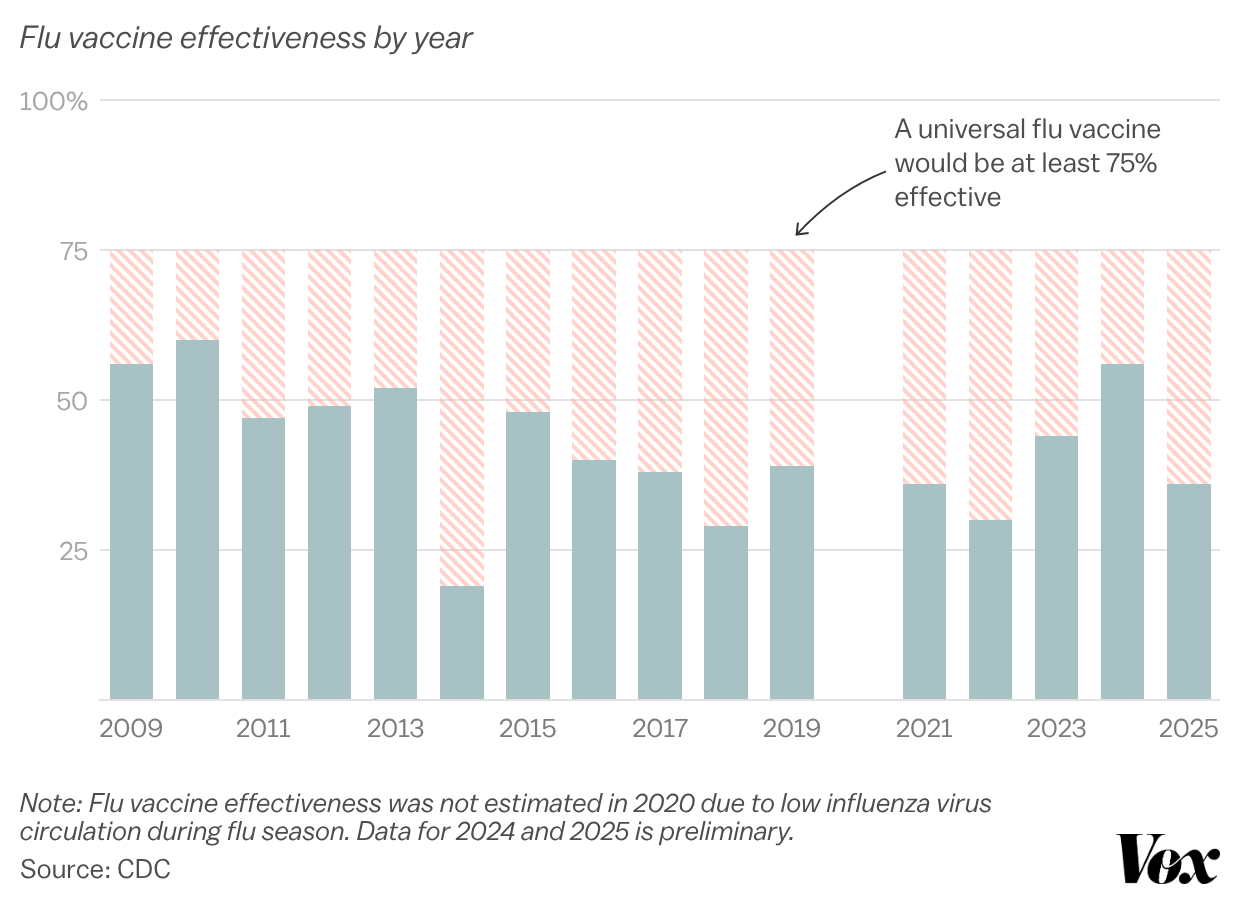
The flu is a gigantic and costly illness, causing 1 billion infections and 300,000 deaths each year. But this new shot, built on advances from the Covid-19 pandemic, is expected to outperform the standard flu vaccine that we've used, largely unchanged, for the past 80 years.
The new shot fixes a problem that has long bedeviled the traditional vaccine: the gap between how quickly the flu virus mutates and how slowly vaccines are produced. The flu is changing constantly. But under current methods, manufacturing a flu vaccine — which, to my enormous fascination, most commonly involves secret chicken farms — takes six to eight months.
That long lag often means the virus circulating during flu season isn't the one the vaccine was designed to target. But the new mRNA vaccine works differently: Instead of using a weakened or dead virus to trigger an immune response, mRNA vaccines contain genetic instructions that train the immune system to fight influenza.
mRNA vaccines also take less time to manufacture, so they can be produced closer to flu season. In a clinical trial, older adults who received Moderna’s mRNA vaccine were 27% less likely to get the flu than those who received the standard vaccine.
Heads up: Vox’s offices are closed tomorrow, so Today, Explained is taking a day off. We’ll be back in your inbox on Monday. |
|
|
Public health experts are justifiably hyped about mRNA technology. In addition to this new flu shot, researchers are developing mRNA vaccines against diseases including malaria, tuberculosis, and HIV. But when it comes to influenza, mRNA isn’t the endgame. The real white whale is a “universal flu vaccine” — a shot that's at least 75 percent effective against influenza A, the most dangerous type of flu virus, and lasts at least a year. The challenge, again, is that the virus keeps mutating. Flu vaccines, whether mRNA or conventional, teach the immune system to recognize a viral protein called hemagglutinin and then fight off the virus.
But hemagglutinin is a part of the flu virus that mutates often. To make a more durable vaccine, researchers are trying to either target parts of the virus that rarely change or teach the immune system to simultaneously recognize many different strains. Several vaccines that use these approaches are already in clinical trials. And if they succeed, the flu shot could hypothetically become more like the measles vaccine — providing years of protection in one go, instead of requiring annual updates. In other words, we’re used to thinking of the flu as a routine winter hazard, but that might not always be the case. If you can persuade people to get their shots, at least.
|
|
|
-
Fauci fight: A Senate committee voted to hold Dr. Anthony Fauci in contempt for refusing to answer questions about the Covid-19 pandemic. The committee can now recommend that the Justice Department prosecute him.
-
Utilities hacked: Iran almost certainly broke into water systems in a dozen states, underscoring America’s vulnerability to cyberattacks.
-
On the podcast: A Massachusetts jury is weighing whether a woman should be convicted in the deaths of her three young children or found not guilty based on her defense of postpartum psychosis. Listen to the whole thing here.
|
|
|
|
➨ Go ahead, take your time. Three etiquette experts tell Vox that, in most casual situations, you can run 10 to 15 minutes late without appearing inconsiderate. But that guideline is very culturally and contextually dependent, which is bad news for chronically late people like myself. I prefer to think it’s a result not of rudeness, but of polychronicism.
|
|
|
|
Today’s edition was produced and edited by me, Caitlin Dewey. Thanks for reading! |
|
|
|
Have thoughts or feelings on what you read here? You can reach me directly by email. I’m at [email protected]. |
|
|
|