I was struck by an observation that one long-time Spokane resident made to NPR this week: “Obviously, we’ve had wildfire seasons,” she said. But she “never, ever imagined” having to evacuate, because she lived so deep inside of the city.
Living in a city is no protection from climate change, though. And the destruction caused by wildfires in cities and suburbs is very much on the rise. Consider the devastation caused by recent fires in Colorado (2021), Hawaii (2023), and Los Angeles (2025).
Why are wildfires causing more damage in cities and suburbs? It’s not because they’re new. One recent study found urban wildfires have remained a fairly stable share of all US fires over the past generation.
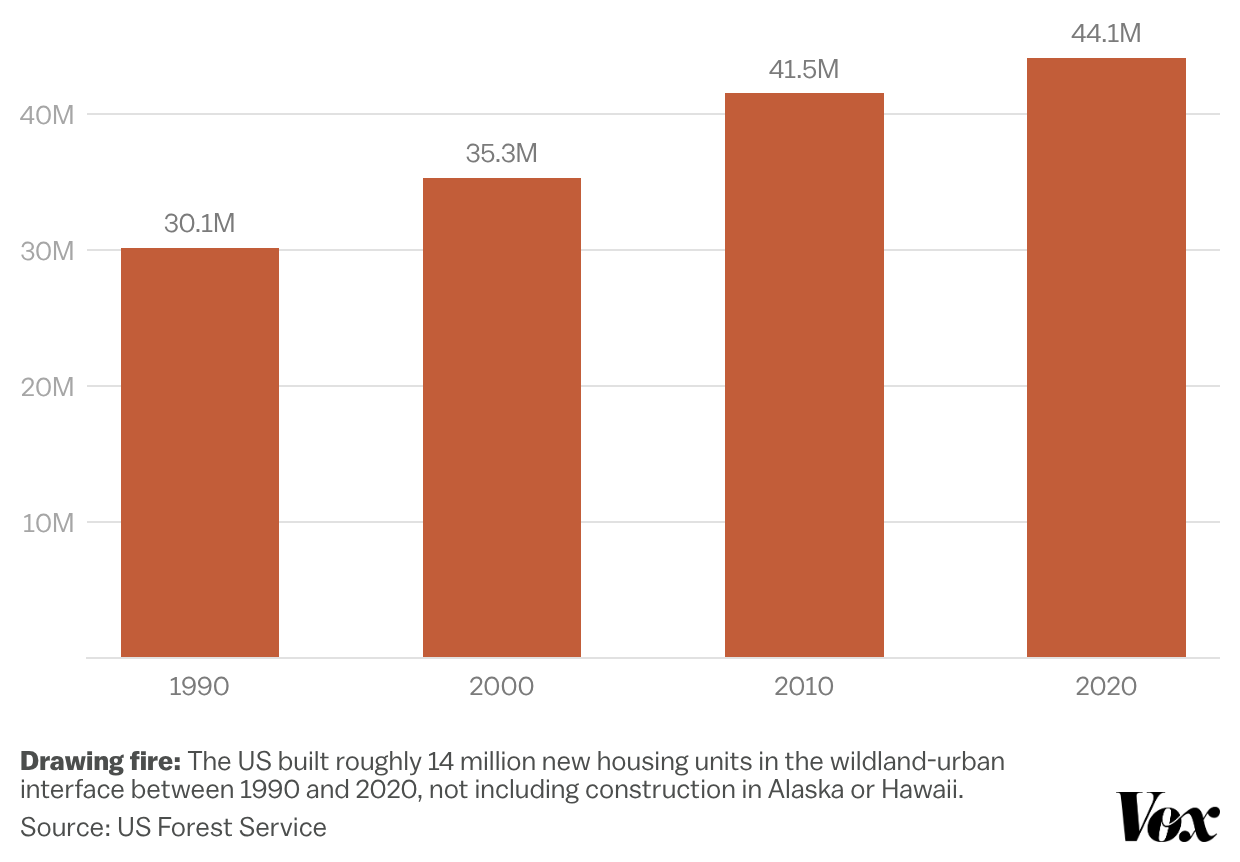
What has changed is the scale of their damage, thanks to factors like climate-driven increases in extreme fire weather and human incursion into forests and grasslands. As a country, we are increasingly building homes and other structures in the “wildland-urban interface” — a liminal zone where neighborhoods and nature overlap.
While housing isn’t dense in these areas, the buildings that exist can serve as tinder that helps fires spread. And putting more people, roads, and power lines into these zones creates more opportunities for ignitions.
All this means that city-dwellers and suburbanites will likely face more wildfire risk in years to come. And for those of you in the Midwest or on the East Coast, like me, don’t assume that wildfires are someone else’s problem. “Every single state” with wildland-urban interfaces also holds the potential for fire disaster, one pyrogeographer told Vox in 2023. That includes communities like Spokane, sure — but also Florida, Minnesota, and Mississippi.