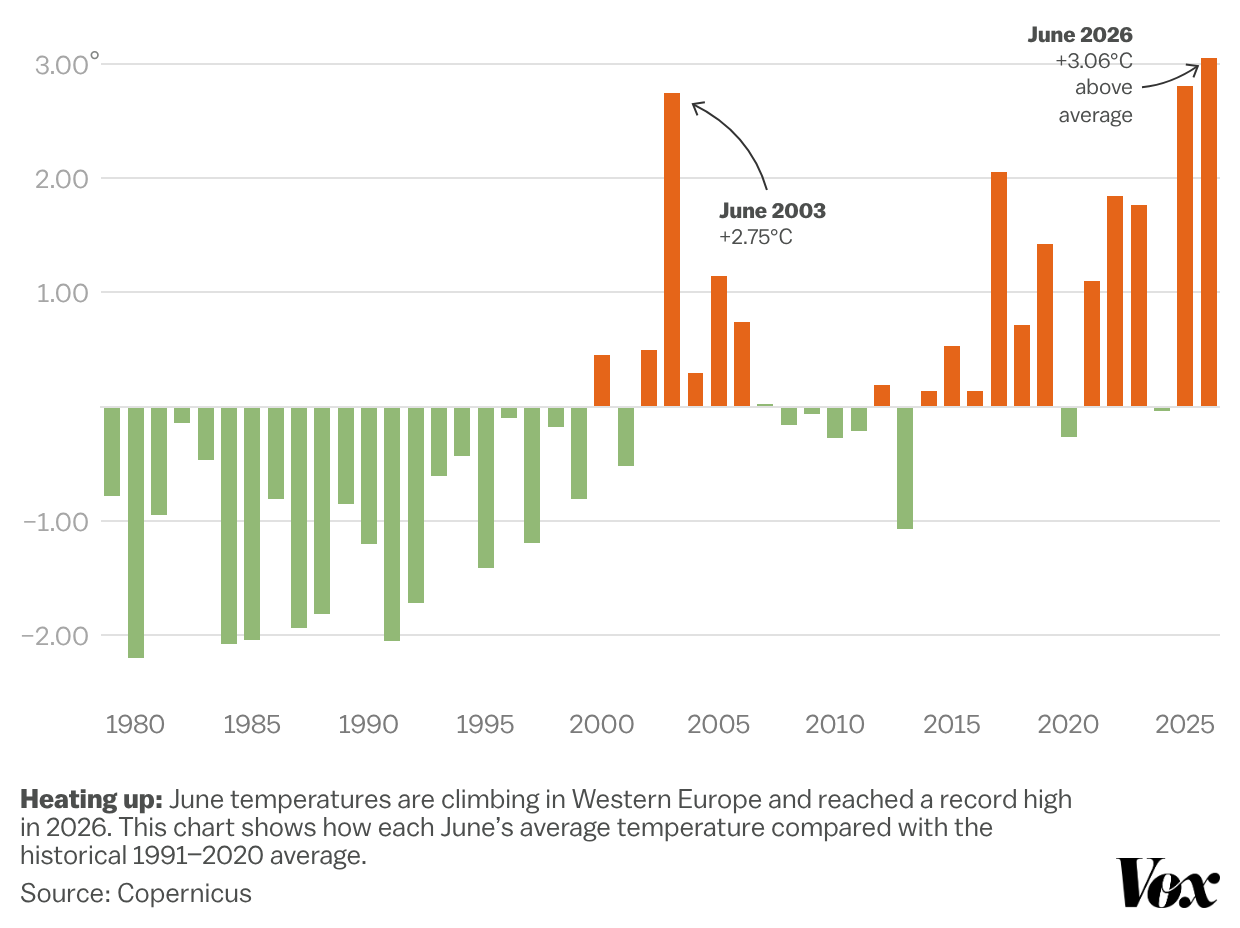
Every continent on Earth is getting warmer. But Europe is riding the express bus. The region has seen its average temperatures rise twice as quickly as the global average over the past 30 years, according to the European Union's Earth Observation Programme.
This dubious honor begs a question, however: Why does “global warming” vary between regions if it is, ya know…global?
The answer relates to local geography and weather patterns. In broad strokes, the same climate story is playing out everywhere: When humans burn fossil fuels, they release carbon dioxide and other greenhouse gases into the atmosphere. Those gases make it harder for heat to escape into space.
But some places warm faster than others. Land heats up more quickly than oceans, for instance — so coastal waters can provide a bit of insulation.
Local weather patterns matter, too. One reason Europe has been hit especially hard is that air currents have increasingly allowed hot air to stall over the continent, fueling intense heat waves like the ones we’ve seen this summer.
Ironically, another major reason for Europe’s rapid warming springs from an environmental victory: In the 1980s, European countries cracked down on sulfur pollution from coal plants and factories. That pollution had been reflecting sunlight back into space and slightly cooling the continent. But as the pollution disappeared, more sunlight reached the ground — and revealed the warming that pollution had previously masked.