|
Penn psychiatrist leading next DSM update seeks more person-centered diagnoses | |
|
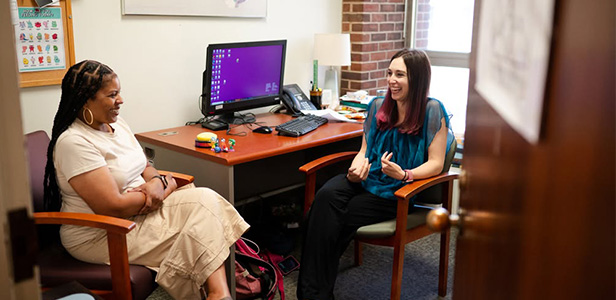
Maria Oquendo, MD, PhD, the Ruth Meltzer Professor and chair of Psychiatry, is leading the strategic committee developing the next edition of the Diagnostic and Statistical Manual of Mental Disorders (DSM), psychiatry’s primary guide for diagnosing mental health conditions.
The committee is exploring changes that would make diagnoses more person-centered by incorporating social, cultural, environmental, and biological factors, emphasizing functioning and quality of life, and allowing clinicians to begin with broader diagnoses that can be refined over time.
It is also considering renaming the manual the Diagnostic and Scientific Manual and creating a “living DSM” that can be updated more frequently as new evidence emerges.
|
|
|
|
|
Americans feel stuck—and it’s making us sick | |
|
A growing sense of “stuckness” driven by barriers in employment, finances, relationships, health, neighborhoods, and civic life, is emerging as a major but overlooked threat to Americans’ physical and mental health.
In a guest essay, Atheendar Venkataramani, MD, PhD, an associate professor of Medical Ethics & Health Policy and a senior fellow at the Leonard Davis Institute of Health Economics, shared that this chronic lack of opportunity and hope fuels stress, worsens health outcomes, and may help explain troubling trends such as stagnant life expectancy.
|
|
|
|
|
When looking for an office job in Philadelphia becomes a job | |
|
In a tough time for job seekers, less than 20,000 jobs were added in the Philadelphia-Wilmington-Camden area between June 2025 and June 2026. 84 percent of them were in education and health services.
Chief Human Resources Officer Katie Heeter said clinical positions, information technology, finance, human resources, and leadership are areas where there is active recruitment.
“We are also recruiting across a broad range of business and operational functions … to support our continued growth and transformation,” she said.
|
|
|
|
|
Traditional Navajo diet shows benefit in patients | |
|
In a randomized clinical trial, medically tailored meals rooted in traditional Diné foods were linked to fewer hospitalizations and emergency visits, improved quality of life, and reduced food insecurity among heart failure patients in the rural Navajo Nation.
The study, led by Lauren Eberly, MD, MPH, an assistant professor of Cardiovascular Medicine, underscores the potential of “Food is Medicine” interventions to address health inequities.
“We hope these results will motivate payors, public health officials, and health systems to adopt similar programs as an integral part of care and covered benefit,” said Eberly.
|
|
|
|
|
Study reveals genetic red flags for CAR T therapy side effects | |
|
A new analysis of patients who took part in CAR T cell therapy clinical trials has revealed genetic signatures of toxicity risk, potentially providing a path forward for future CAR Ts to be engineered to be safer.
Overall, “this study convincingly demonstrates that the underlying germline genetics of the patient act as a major, intrinsic determinant of both CAR T cell expansion and clinical toxicity,” said CAR T cell therapy pioneer Carl June, MD, the Richard W. Vague Professor in Immunotherapy in Pathology and Laboratory Medicine, who was not involved in the study.
|
|
|
|
|
T-Cell exhaustion: From biological adaptation to cancer therapy | |
|
E. John Wherry, PhD, the Barbara and Richard Schiffrin President’s Distinguished Professor and chair of Systems Pharmacology & Translational Therapeutics, reflected on his early interest in science and explained how T-cell exhaustion limits the immune system’s ability to fight cancer and chronic infections.
He discussed how immunotherapies such as PD-1 blockade can restore T-cell function, why some patients do not respond, and how personalized immunotherapy may improve outcomes.
Wherry also shared the importance of mentorship, collaboration, and music in shaping his career.
|
|
|
|
|
Who should handle the growing volume of oncology messages? | |
|
Research shows medical oncologists and hematologists received an average of 203 EHR messages per week, which is roughly the same inbox volume recorded in primary care.
“Oncology care has become more complex.
Patients have more access to their portals,” said Aditi P. Singh, MD, an associate professor of Clinical Hematology-Oncology. She explained that portal communication works for simple questions but becomes difficult when cancer care requires nuanced discussion.
|
|
|
|
|
TRF2 protein preserves muscle stem cell identity and drives repair | |
|
A surprise role for a protein long thought to mainly just protect DNA from damage could shed light on conditions like muscular dystrophy and even cancer. “Rather than simply protecting DNA, TRF2 seems to be key to regenerating muscle throughout life,” said Foteini Mourkioti, PhD, an associate professor of Orthopaedic Surgery.
|
|
|
|
|
Semaglutide sustains lower calorie intake for more than a year | |
|
Semaglutide helped people eat substantially fewer calories for more than a year, even as some feelings of hunger gradually returned.
In a 60‑week study, led by Jena Shaw Tronieri, PhD, a senior research investigator at the Center for Weight and Eating Disorders, participants on semaglutide consistently consumed 24–30 percent fewer calories and lost about 15 percent of their body weight, compared with 3 percent in the placebo group.
The findings show that long‑term appetite sensations may partially return, but the medication continues to support reduced calorie intake and sustained weight loss.
|
|
|
|
|
GLP-1 drugs could become personalized for individuals, study says | |
|
GLP-1 therapies could have an impact well beyond just weight loss, as new research led by Penn Medicine shows that different versions of the drugs have different effects on heart and metabolic health. “We hope that clinicians are encouraged by this study to take a more comprehensive and individual approach to treatment selection,” said Yong Chen, PhD, a professor of Biostatistics.
|
|
|
|
|
|
|
|
|