| | Ukraine, Gulf conflicts risk going global, US measles case surge as vaccination falls, German carmak͏ ͏ ͏ ͏ ͏ ͏ |
| |  Bordeaux Bordeaux |  Washington DC Washington DC | Berlin |
 | Flagship |  |
| |
|
The World Today | 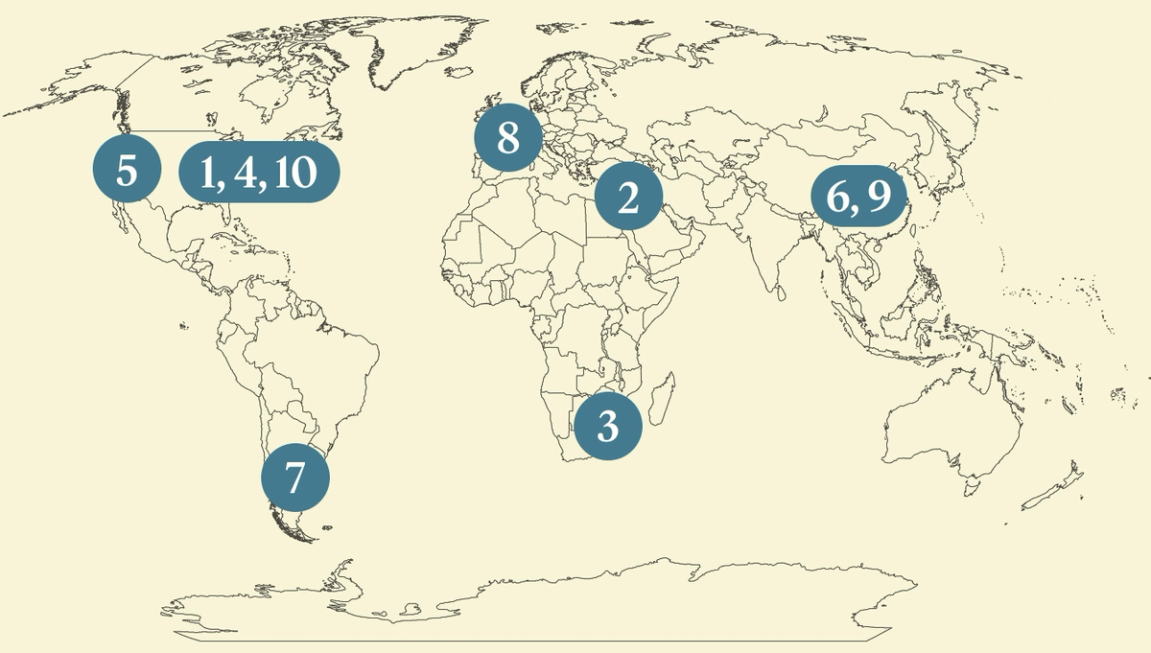 - Iran, Ukraine wars entwine
- Netanyahu’s poll challenge
- HIV resurgence warning
- US measles at 35-year high
- Nvidia’s spending spree
- Audi, Mercedes’ China woes
- IMF backs Milei’s reforms
- Europe’s devastating fires
- The revival of the Yangtze
- Mars life evidence grows
 A biography of a ‘forgotten giant’ of medicine. |
|
Israel, Ukraine leaders court Trump |
 A Ukrainian drone strike near St Petersburg, Russia. Planet Labs PBC/Handout via Reuters. A Ukrainian drone strike near St Petersburg, Russia. Planet Labs PBC/Handout via Reuters.US President Donald Trump will meet the leaders of Israel and Ukraine in Washington today as fears grow that their conflicts may be going global. The wars in the Middle East and Ukraine are increasingly intertwined: Russia’s purchases of Iranian Shahed drones have boosted Tehran’s coffers as its economy falters, while Moscow has reportedly shared intelligence with Iran for its war with the US. Now the conflicts risk expanding rapidly beyond their regions: Ukraine has warned that 30,000 North Korean troops may soon be fighting for Russia, while China has provided help to the Kremlin and Tehran, raising alarms in Washington. “Regional conflicts and great-power miscalculation can be a deadly combination,” the Financial Times’ chief foreign affairs commentator argued. |
|
Netanyahu faces stiff competition |
 Israeli opposition leader Gadi Eisenkot. Amir Cohen/Reuters. Israeli opposition leader Gadi Eisenkot. Amir Cohen/Reuters.Israel’s Prime Minister Benjamin Netanyahu is facing a stern electoral challenge from a liberal-minded war veteran, as concerns over the country’s democracy grow. Former military chief Gadi Eisenkot, whose son was killed during Israel’s response to the Oct. 7, 2023 attacks, is neck-and-neck with the incumbent in the polls. He represents a particular problem for Netanyahu, The New Yorker’s David Remnick argued: He cannot be dismissed as weak when calling for a “democratic… and liberal” Israel, and has impeccable man-of-the-people credentials. But a former PM warned that Netanyahu might refuse to recognize the results if he loses, “like his friend Trump did.” And if elected, Eisenkot would face the same dilemmas over Palestinian statehood that have plagued his predecessors. |
|
HIV funding at 20-year low |
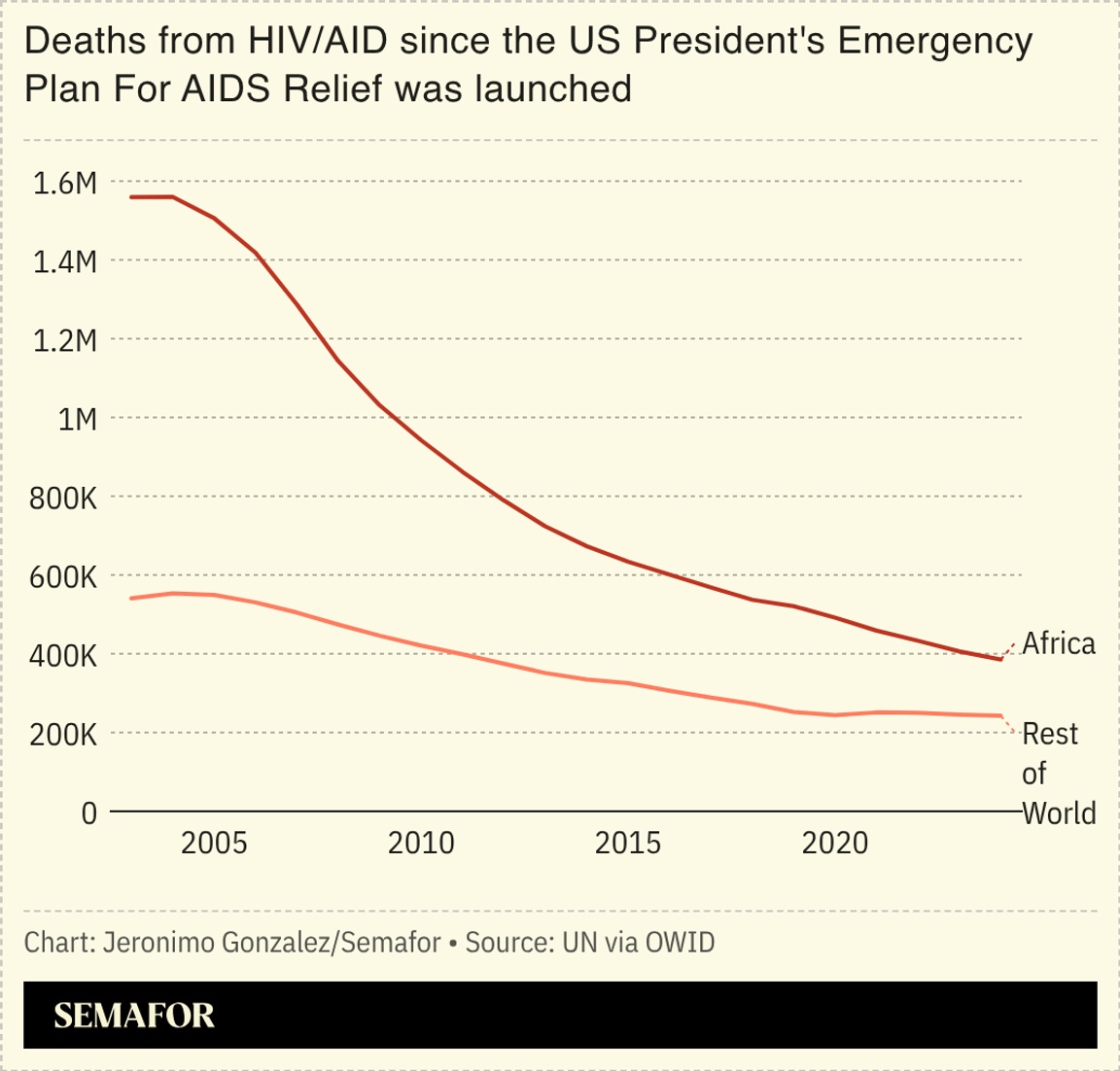 The world is facing a resurgence of HIV cases after global funding fell to its lowest level in nearly two decades last year, putting tens of thousands of lives at risk. Washington accounted for almost three-quarters of international AIDS funding before US President Donald Trump slashed foreign aid spending, and European countries have followed suit. The cuts risk undoing years’ worth of progress against the disease, notably in Africa, where deaths have plummeted from almost 1.5 million two decades ago to less than 400,000 in 2024. “The long-term trajectory could be back to as depressing as I thought it was going to be,” an expert told The New York Times. |
|
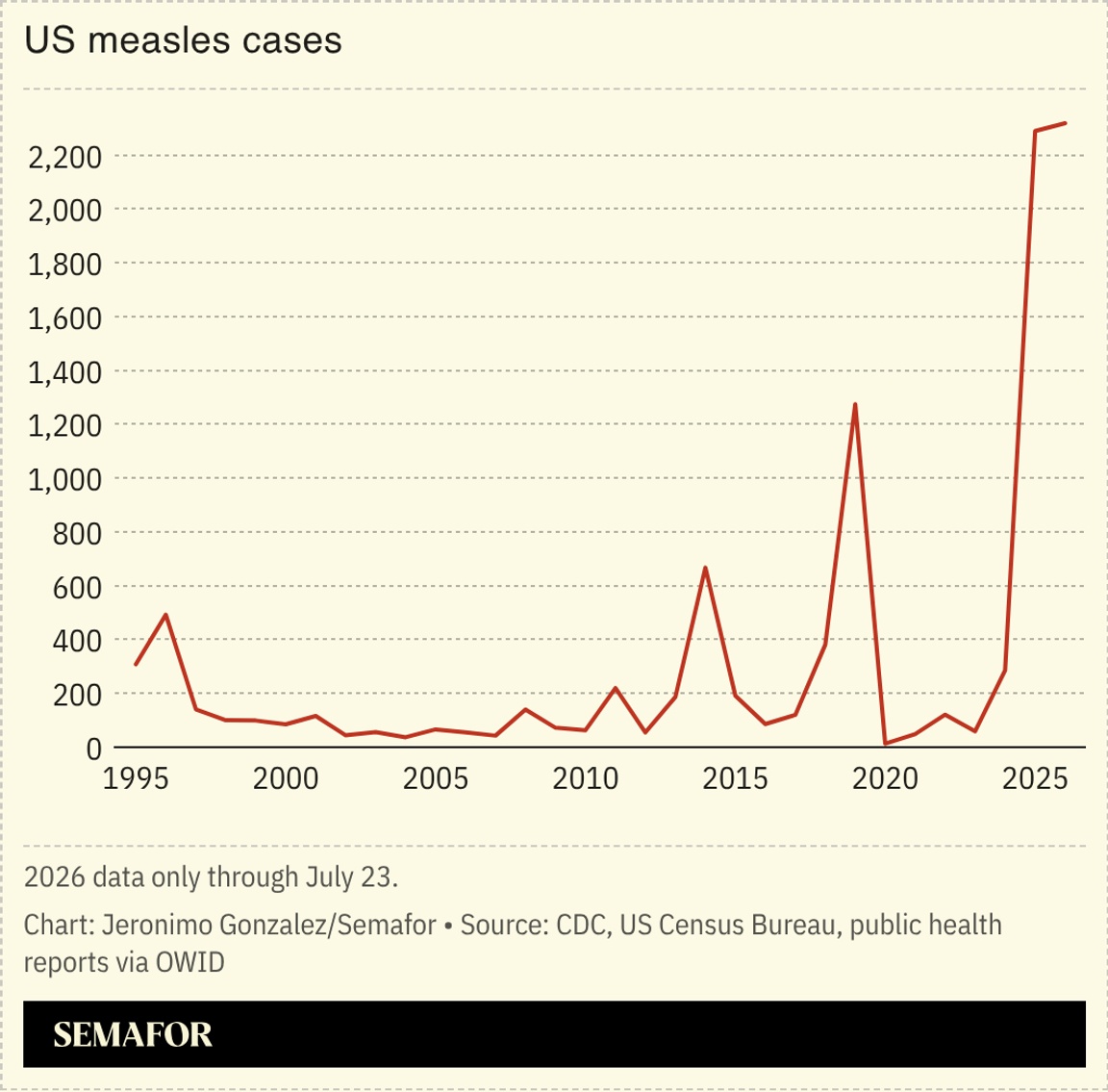 US measles cases hit a 35-year high as vaccination rates fall. Though still far short of 1990s levels, before widespread vaccination drove a sharp drop in measles cases, the 2,295 recorded this year are more than all of 2025. And 93% of this year’s patients are unvaccinated. Measles is usually the first disease to rise when vaccine levels dip, because it is extremely contagious. US vaccine uptake has declined for years, and most counties are below herd immunity levels. Health Secretary Robert F. Kennedy Jr. is a longstanding vaccine skeptic; White House advisors had previously asked him to tone it down ahead of the midterms, but US President Donald Trump has now changed position, The Wall Street Journal reported. |
|
Nvidia’s AI spending spree |
 Nvidia CEO Jensen Huang. Manami Yamada/Reuters. Nvidia CEO Jensen Huang. Manami Yamada/Reuters.Nvidia continued its AI spending spree, even as the market grows ever more jittery about tech giants’ outlay. The chipmaker signed $50 billion in leases on a massive Texas data center, following reports it is in talks to provide a $250 billion backstop for an OpenAI lease on another data-center project, and is investing $5 billion in a former OpenAI chief scientist Ilya Sutskever’s company Safe Superintelligence. Nvidia CEO Jensen Huang is using the $5 trillion company’s huge financial clout to keep it central to the AI expansion, the Financial Times reported. Meanwhile, the brutal weeks-long selloff in tech stocks continued: Korean and Japanese indices fell heavily overnight, with chipmakers showing particularly steep declines. |
|
German carmakers struggle |
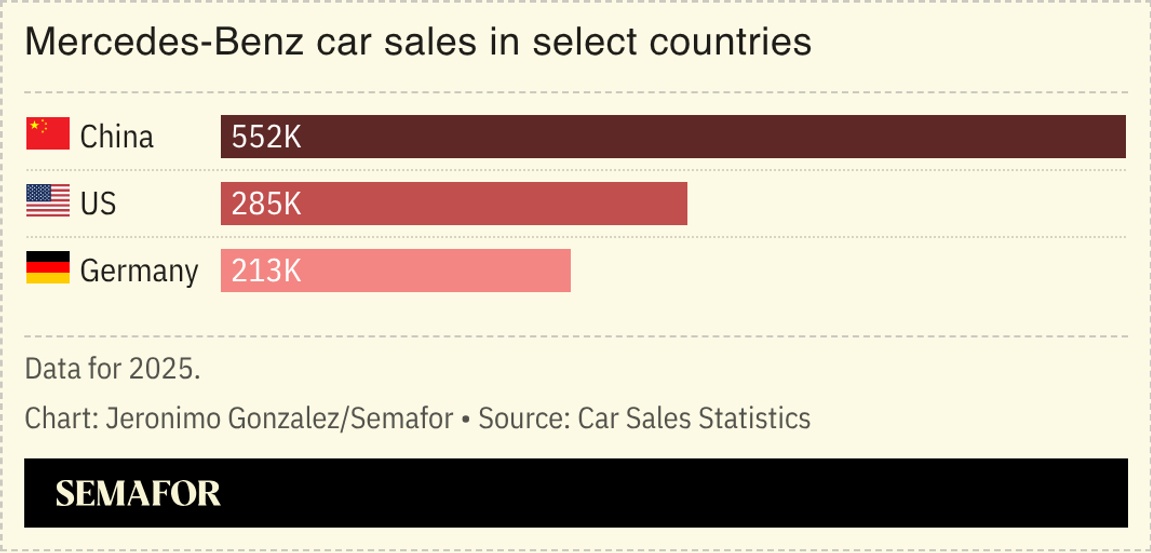 Two major German carmakers lowered their targets on plummeting sales in China, even as Chinese auto firms eat away at European companies’ domestic dominance. The earnings reports from Audi and Mercedes-Benz underscore the mammoth challenge facing legacy European automotive giants, which are grappling with slow growth in the world’s second-biggest economy — a key market for them — and Chinese firms’ lead in the fast-growing EV market worldwide. At home, Chinese carmakers are facing the worst year for sales since 2021; meanwhile, one research firm projects Chinese firms will nearly double their market share in Europe by 2030. “China’s assault on Europe’s car market has barely begun,” the Financial Times said. |
|
IMF backs Argentina’s reforms |
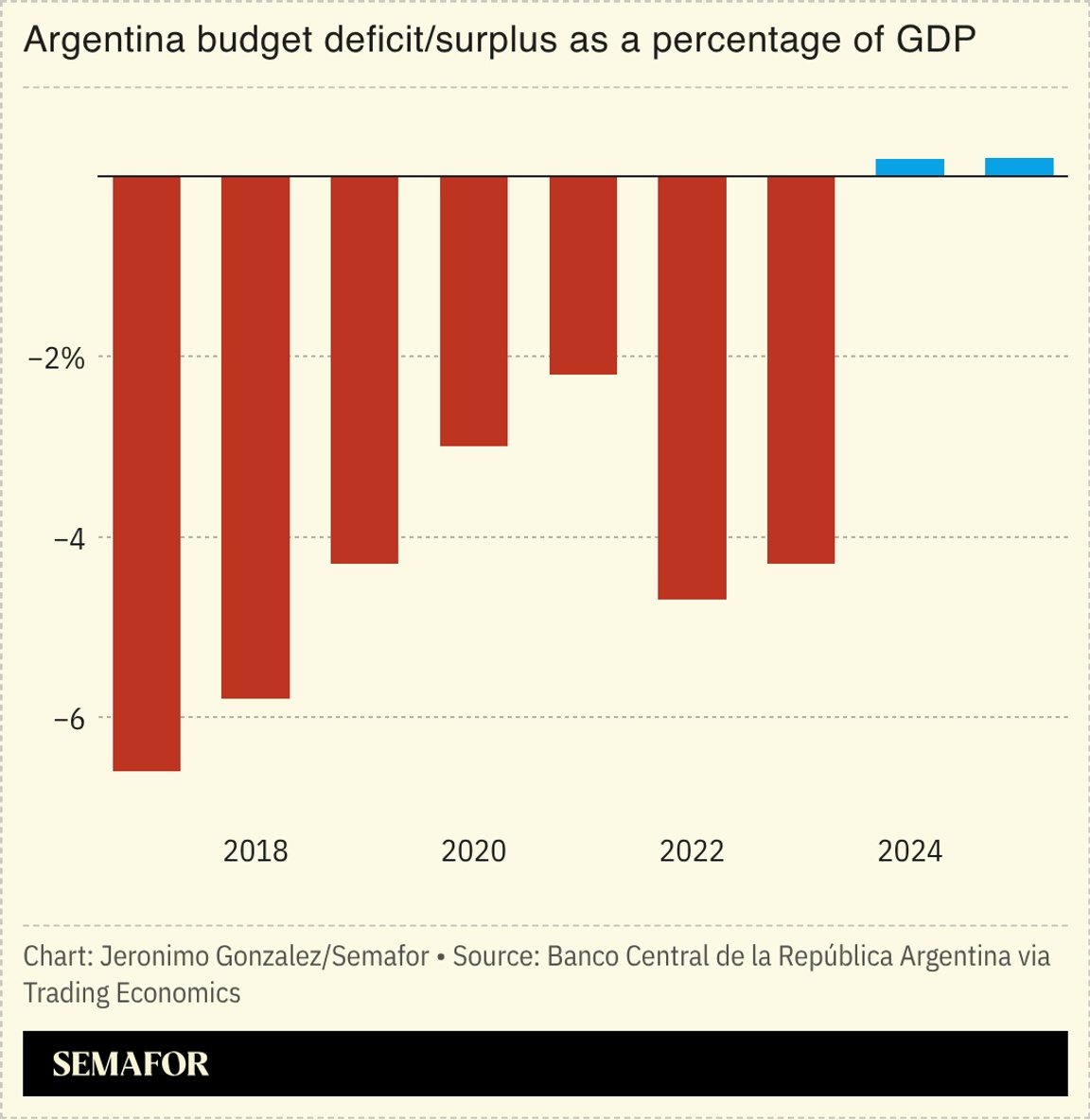 The head of the International Monetary Fund backed Argentinian President Javier Milei’s economic reform program during a visit to Buenos Aires, saying indicators showed “a much sounder picture.” Since becoming president in 2023, Milei has overseen a rapid cost-cutting program that has led to the first budget surplus in years. However, the austerity drive, which has included steep cuts to pensions, has eroded Milei’s popularity — it fell to its lowest-ever level this month — leaving his once almost-assured reelection in next year’s vote in doubt. Experts fear that his electoral defeat could lead to a rapid devaluation of the peso, weakening Argentina’s capacity to pay back foreign lenders, chief among them the IMF. |
|
 Yves Herman/Reuters Yves Herman/ReutersOut-of-control wildfires represent France’s greatest crisis since World War II, President Emmanuel Macron said. More than 250,000 people have been evacuated, with fires threatening the outskirts of Bordeaux and raging through popular tourist areas and wine regions. Neighboring Spain is also struggling to control major blazes, especially near Madrid: Six times as much of the country has been burnt this year than in the same period in 2025. The two governments are promising aid packages to help people who have lost homes or businesses. Europe’s wildfire season has been supercharged this year by a long, hot, dry spell, which has baked vegetation; the conflagrations are creating “fire thunderstorms” with 100 mph winds and lightning, spreading the flames further. |
|
Revival of the Yangtze River |
 Thomas Peter/Reuters Thomas Peter/ReutersA fishing ban on China’s Yangtze River has led to a remarkable recovery of biomass in the waterway. The 6,300-kilometer (3,900-mile) river, Asia’s longest, had for decades been an environmental disaster: It was a depository of industrial waste, sewage and rubbish, while unsustainable levels of fishing had caused the extinction of some iconic species, like the near-blind baiji dolphin. However, a 2021 protection campaign has led to a remarkable turnaround, with the total weight of fish in the river tripling in the last few years after decades of decline. The recovery will allow China — the world’s biggest polluter by CO₂ emissions — “to cast itself as a champion of biodiversity,” The Economist reported. |
|
Evidence grows of life on Mars |
 The surface of Mars. NASA/JPL-Caltech/University of Arizona/Handout via Reuters. The surface of Mars. NASA/JPL-Caltech/University of Arizona/Handout via Reuters.Evidence is accumulating that life existed — and may still exist — on Mars, scientists argued. There are several strands: long-chain organic molecules and curious spots on rocks found by rovers, and strange geochemical signs detected by 1976’s Viking lander. The various facts are becoming “difficult to explain… abiotically,” an astrobiologist told Scientific American, as the necessary explanations are mutually exclusive. Carl Sagan argued that life should be the “hypothesis of last resort” because “extraordinary claims require extraordinary evidence,” but too conservative a burden of proof could mean missing vital signs. There are reasons to be cautious, though: Earlier lines of evidence, from purported “canals” on the surface to apparent fossil bacteria in a Martian meteorite, were dead ends. |
|
 - Peru’s new president, Keiko Fujimori, is due to be inaugurated in Lima.
- Late Republican Senator Lindsey Graham’s funeral will be held in Washington DC, with US President Donald Trump due to give an address.
- The latest Spider-Man film, ‘Brand New Day,’ premieres in Los Angeles.
|
|
 Albert Sabin: The Life of a Polio Vaccine Pioneer, by Karen Torghele. When people think of the polio vaccine, they tend to think of Jonas Salk, who developed the first. But Sabin’s competing version, released not long after, was crucial in getting the disease under control in the years after World War II. He is largely forgotten — in part because Salk was first, in part because Sabin was less personable. Torghele, an epidemiologist, “does full justice to one of medicine’s forgotten giants,” according to The New York Times. Buy Albert Sabin from your local bookstore. |
|
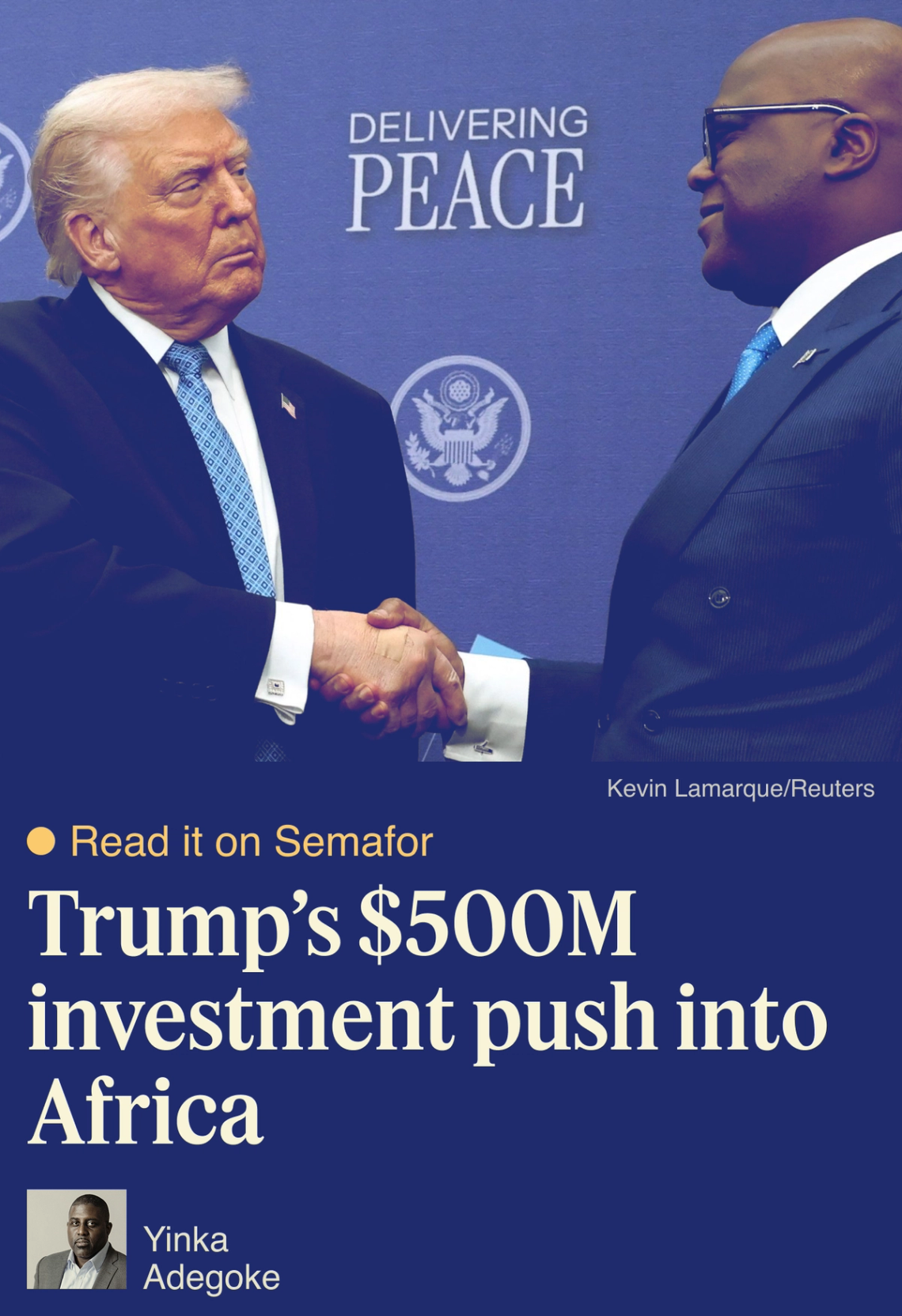 View: A new State Department initiative embodies the US administration’s pledge to prioritize ‘trade over aid,’ using development dollars to create the conditions for private investment. → |
|
|
| |