Zeus’ Law is the sacred law of hospitality. The ancient Greeks called it xenia: the sacred duty of the host to the guest, and the guest to the host. Zeus himself presided over it. They called him Xenios: Zeus of Strangers, protector of guests, foreigners, beggars, and travelers at the door. To turn someone away hungry was not just unkind. It was a crime against the gods. After watching the Odyssey, I could not stop thinking about this. “Zeus’ Law” is the phrase Christopher Nolan uses throughout the film. I have spent most of my life thinking about hospitality, but I had never considered it a law. Zeus’ law meant you fed the stranger before you asked his name. You gave him a good seat, water for his feet, warmth, before any question of what you might get in return. The Greeks believed that a god might arrive disguised as a beggar dust on his sandals, hungry like anyone else. You couldn't know. So you treated everyone as if they might be a god. |
|
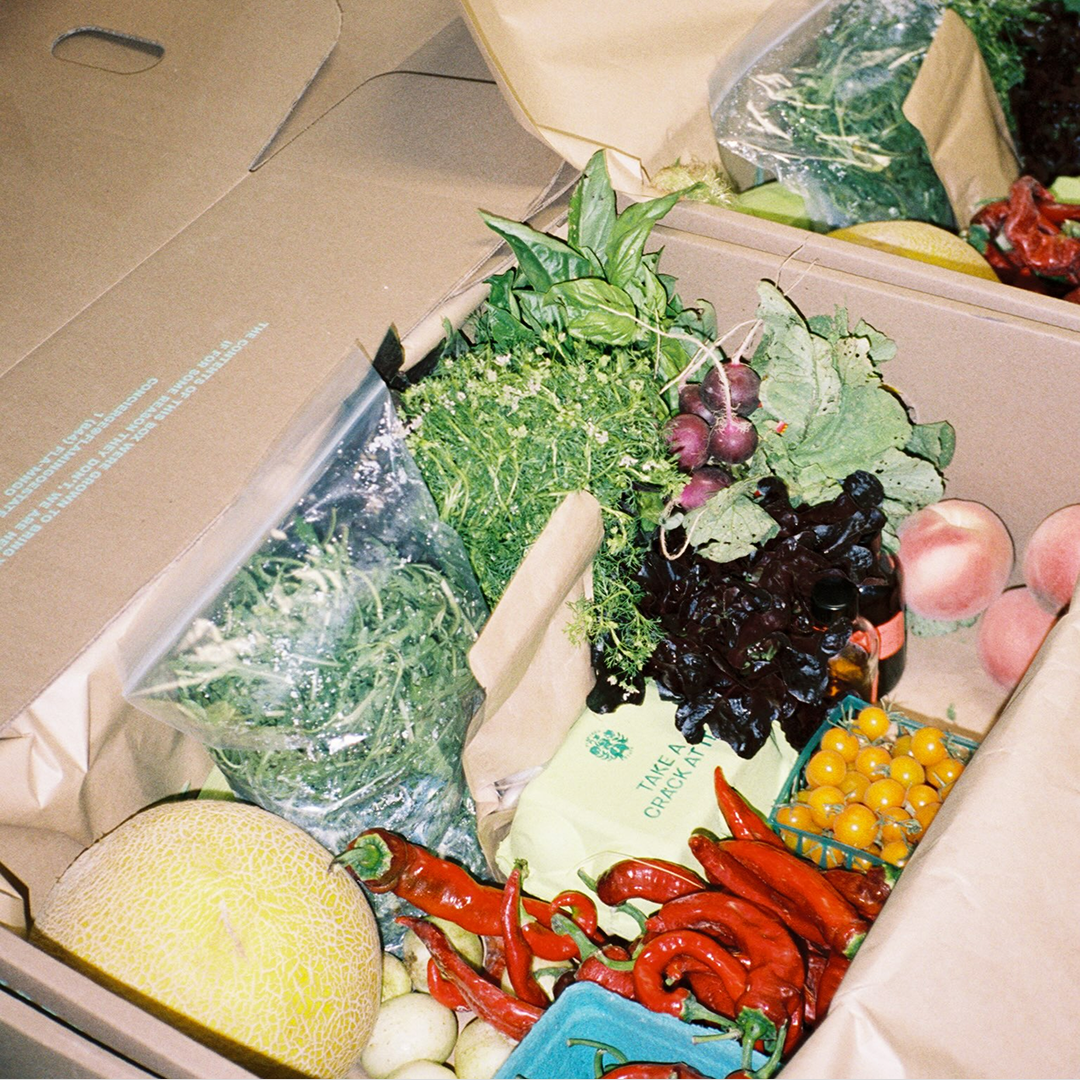
In ancient Greece, hospitality was one of the laws holding civilization together. In a world without hotels, passports, phones, or international law, travelers survived because households agreed to protect one another's guests. These relationships could continue between families for generations. It was reciprocal. The Odyssey is really one enormous examination of hospitality. Which, in simple terms, stands for the idea that while you are beneath my roof, you will be safe. Doesn't need to be fancy. It just needs to be real. That's the part of the story we understood before we understood anything else about running a business. As you may know, our story began in the pandemic. In the midst of an entire world shutting down, we heard that a local farmer might lose her farm because she could not sell her produce, with no restaurants open to buy it. So we did the only thing that made sense: we put together Farm Boxes and started selling them in our parking lot. What was left over went to the food banks. We showed up with what we had. Flamingo Estate was born. |
|
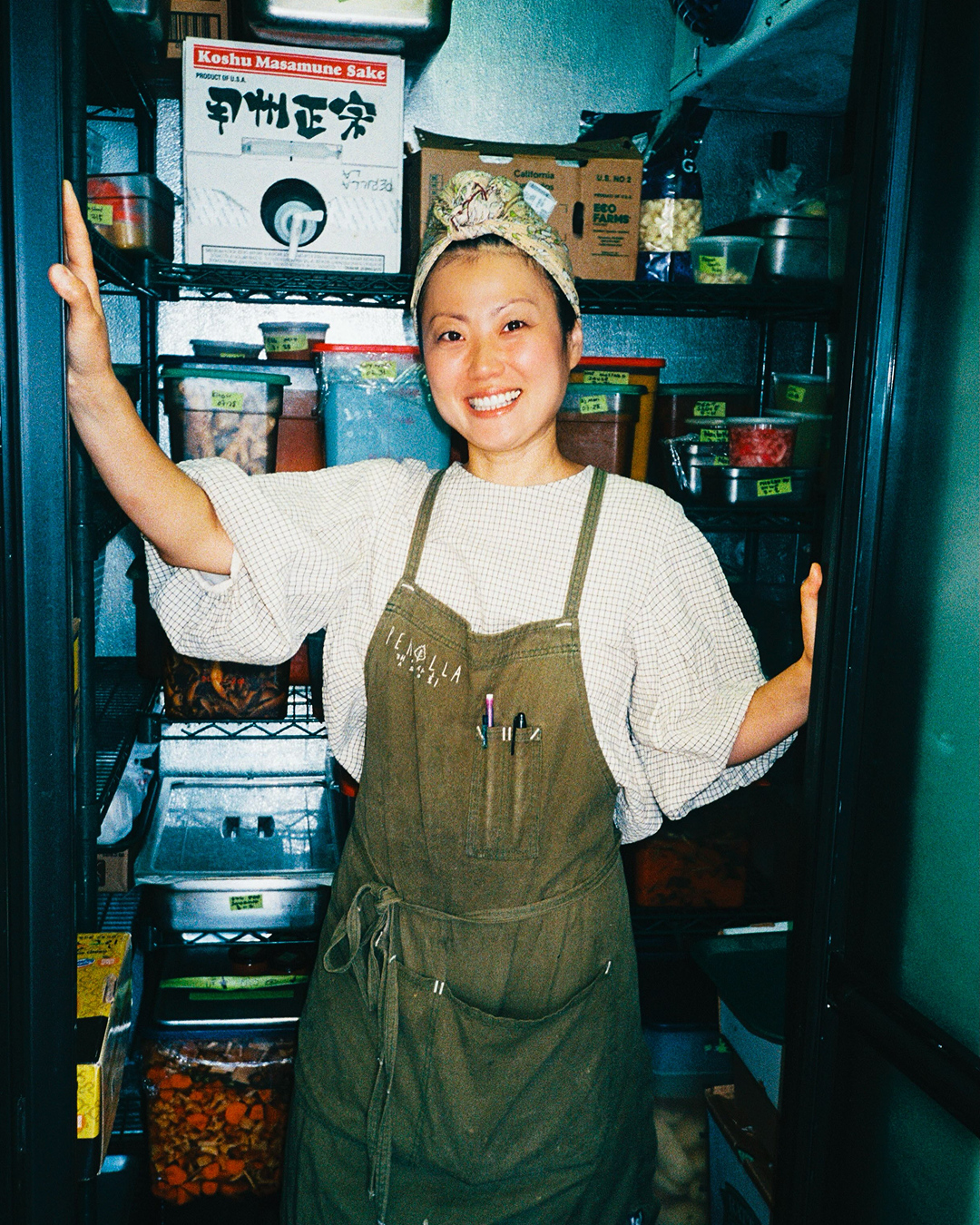
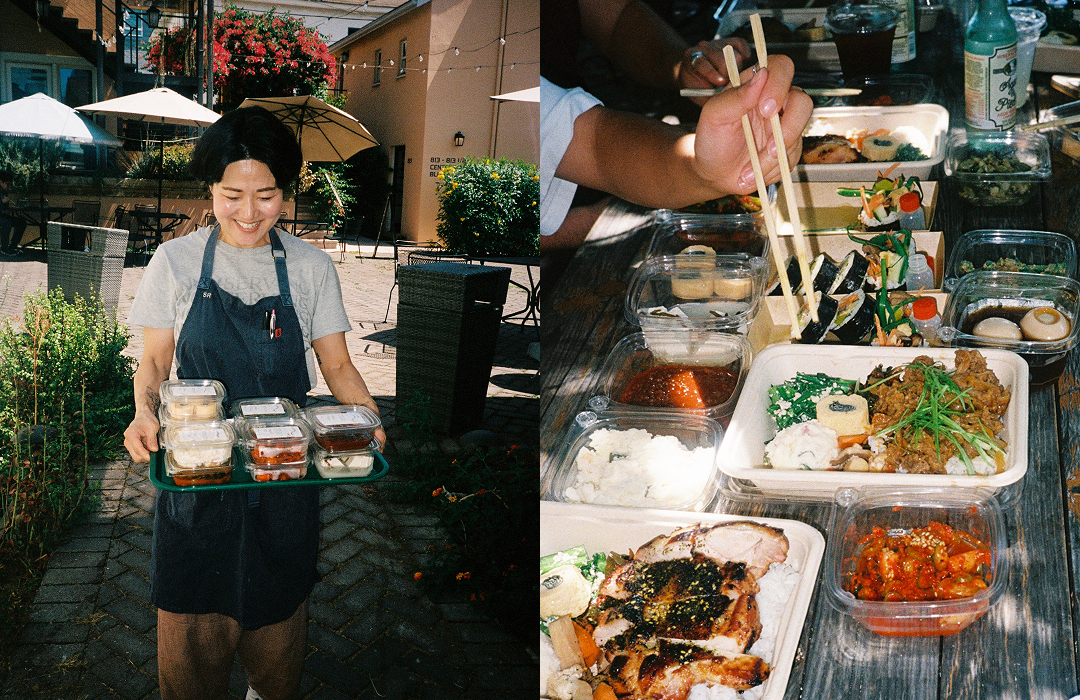
Across town, Chef Jihee Kim of Perilla — who is curating our Farm Box this week — had the same idea. Just a couple months after the restaurant she was working at closed for the pandemic, Kim started selling gimbap and banchan directly out of her apartment. No dining room, no staff, just her and whoever found their way to her door. The response was so overwhelming, she outgrew her apartment very quickly. Moving on to borrowed kitchens, then an art studio, carrying her knives from place to place. Today Perilla lives inside a converted garage you could almost miss walking past. And in the spirit of Zeus’ law, out of that impossibly small space (just 260 square feet) she still feeds everyone who shows up. Jihee Kim was raised in Busan, Korea, where she was immersed from an early age in her family's small restaurant, founded by her grandmother nearly 40 years ago, learning fermentation techniques like doenjang-making. She left Korea at 20 and enrolled in culinary school in San Francisco, cooking her way through kitchens that shaped how she thinks about seasonality and tradition, before landing in Los Angeles to make the food she grew up on, her own way. |
|
Today, Jihee Kim is a true queen of vegetables and the chef behind Perilla, named one of the NY Times' "America's Best Restaurants" and ranked #18 on the LA Times' "101 Best Restaurants" list. She's considered a master of fermentation and banchan, the small side dishes that accompany rice in a Korean meal. Instead of one main dish commanding the table, a Korean meal arrives as many small ones. Shared, refilled, passed hand to hand until everyone's had enough. The concept of banchan is its own quiet version of Zeus’ law. Nothing grand. Just plate after plate, offered freely, so that no one at the table goes without. That's stayed true for Jihee from her apartment days to her storefront now. In her kitchen, food belongs to anyone who pulls up a chair. |
|
This week, as the curator of our Farm Box, she is sharing the recipe to one of Perilla's most popular Summer banchan: Cucumber & Melon Muchim. In the Box, you’ll find what you need to make it at home: Japanese Cucumber, Bonny Melon, and Garlic. Jihee has also included Black Mission Figs, Chinese Eggplant, Fresno and Aji Chile Mix, Green and Red Little Gem Mix, Ginger Root, Purple Cherokee Tomatoes, Regeneratively Grown Organic Calrose, Brown Rice, Watermelon Radish, Shinko Pears, Sesame Gochujang Sourdough by Out of Thin Air, Hot Mustard Sauce, Gochujang Sauce, and much more. We are so grateful. The radical idea inside Zeus' Law was not merely to be generous to your friends. It was: feed the stranger before you ask him to explain himself. All great stories start there. And turns out, so do accidental businesses. As always, cook a meal for someone you love. And if you can, feed a stranger too. x Richard |
|
|
|
|