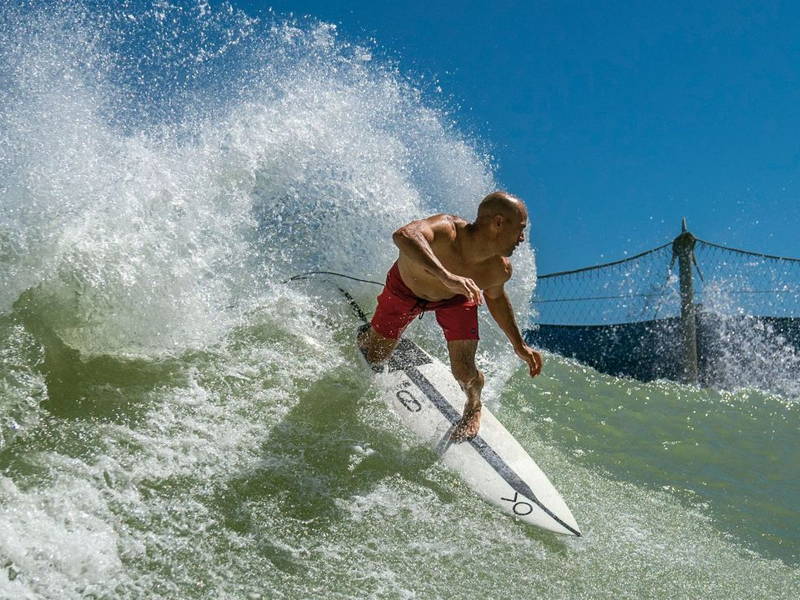
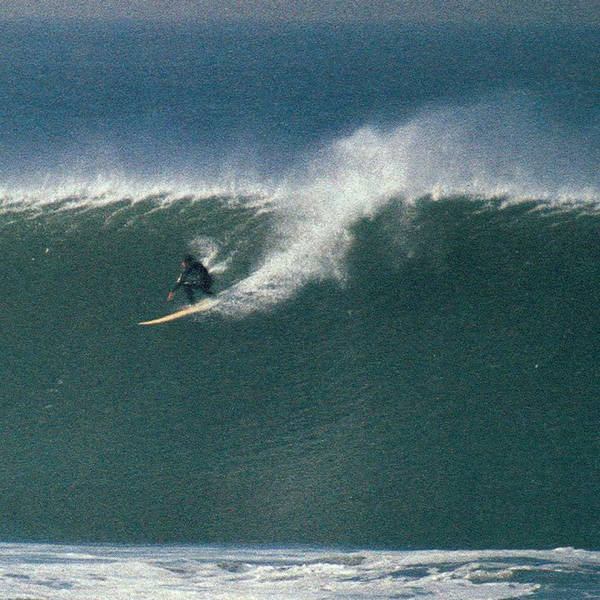
The next Olympic surfing competition will be held in the summer of 2028, in San Clemente, California, on a wave called Lower Trestles. But the surfers on Team U.S.A. won’t have to travel to the coast in order to get in practice runs. Earlier this summer, USA Surfing announced that it will be building an artificial version of Trestles in a wave pool in Utah, for the team to train on.
Wave pools have come a long way. In 2018, the New Yorker staff writer (and lifelong surfer) William Finnegan visited Kelly Slater, a legend in the sport, at his then fledgling Surf Ranch, in the farmlands of central California. There, Slater, in partnership with scientists at the University of Southern California, had pulled off the unthinkable: he’d created a seemingly perfect wave in a pool, more than a hundred miles from the nearest ocean.
Finnegan, who won the Pulitzer Prize for his surfing memoir, “Barbarian Days,” reports on the mechanics behind the pool, and even gets a chance to ride the wave himself. “I found myself bug-eyed, forgetting to breathe, silently shouting, ‘Look at that wave!’ ” he writes. “It was a once-in-a-lifetime wave. Of course, I was being absurd. Every wave here did that.” He attends the first-ever professional competition at Surf Ranch, and considers what the technology means for the future of the sport. Slater envisions a world in which every town has a surf pool, and surfing is as mainstream as soccer.
Almost a decade later, at least two dozen surfing-wave pools are operating around the world, according to Surfline, a popular surf-forecasting website. Plenty more are planned or under construction. But such pools are still rare enough to inspire awe. “We call it the smile machine,” Finnegan hears someone, possibly a publicist, say. As another perfect wave makes its way down the tank, he admits he isn’t sure who is speaking. “I had trouble paying attention.”