
|
 |


In this send:
Nutrafol, Zoï, Function Health, Quest, oral swabs, InBody, LLMs, cycle tracking, P5P, Sculptra, Prenuvo, lion’s mane, Oura, BPC-157, mood journal, Accutane, IGF-1, Pubmed, bimagrumab, Eight Sleep, Dr. Derya Unutmaz, Apple Health, Github…
Hi! Welcome back to High Touch. Today I’m writing about one of the other tabs that’s always open on my browser, in addition to this one and the MyTheresa new-in page: the Claude chat where I store all of my health and aesthetics data.
To quote a stat from memory, personal health is one of the fastest growing uses for LLMs, and companies like OpenAI and Anthropic are investing heavily in their biology teams. But in an informal survey I conducted via texts to friends, only one in nine is using AI in this way. Below is how I use it. Not necessarily the best way or the right way, just a case study of one such approach.
But first, thoughts and feelings from the High Touch universe.
A touch of High Touch
We bought a set of electronic cupping tools recently—these ones from Revo—and my back has become a landscape of red and purple crop circles, the deepest of which indicating where my fascia is tightest. They’re >$100, a cheap and instant knot-relief alternative to WTHN’s $120 per-session fee.
Allergan Aesthetics, maker of Botox (the official brand), introduced a new fast-onset, short-term neuromodulator called Boey, which just got approved for use in Europe. Visible in as little as eight hours, lasts as long as three weeks. This of it as an event-prep treatment, if you can’t wait the typical 5-7 day period for traditional ‘tox to kick in. Not yet FDA-approved, but already available in some clinics in the US if you know where to look.
Paging Brynn Wallner! Casio (yes) launches a…ring watch that can track heart rate, blood oxygen, and sleep, record running, walking, and cycling workouts, and follows menstrual cycles. It costs $294 and is currently only available in China.
 |
 |
My routine used to consist of taking Nutrafol and getting botox a few times a year. As my protocol became more informed and complex, my management system needed to be more sophisticated, too.
It started after my Zoï medical review (a French luxury health check-up, I documented my visit and data previously for High Touch). There were minerals I was supposed to take in the mornings while fasted, and others I was to take with food, hours away from other prescribed micronutrients. There were supplement courses that lasted weeks, others months, and others indefinitely. Some on alternating days, some only on weekdays, some only on the first of the month, some only during certain days of my cycle. I was advised to schedule specialist appointments and follow-up bloodwork over staggered time frames.
I organized this info into a Google Doc that was part visual pill organizer, part wall calendar. This worked fine for a while.
Six months later, I signed up for Function Health, an out-of-pocket biometrics platform with group-negotiated pricing, and ran an additional 153 biomarker tests. Results started to trickle into my Function app’s data tab, and then the full panel was in—including a new suite of supplement recommendations, each with their own rules. Now all together, I had pages upon pages of health documents from Function, Zoï, self-purchased Quest labs, and years of annual physicals. Not just bloodwork and urinalysis, but DEXA scans, oral swabs, InBody scores, bio-ages, autonomic readings, etc.
The numbers were siloed and not speaking to each other, just sitting in a folder on my laptop.
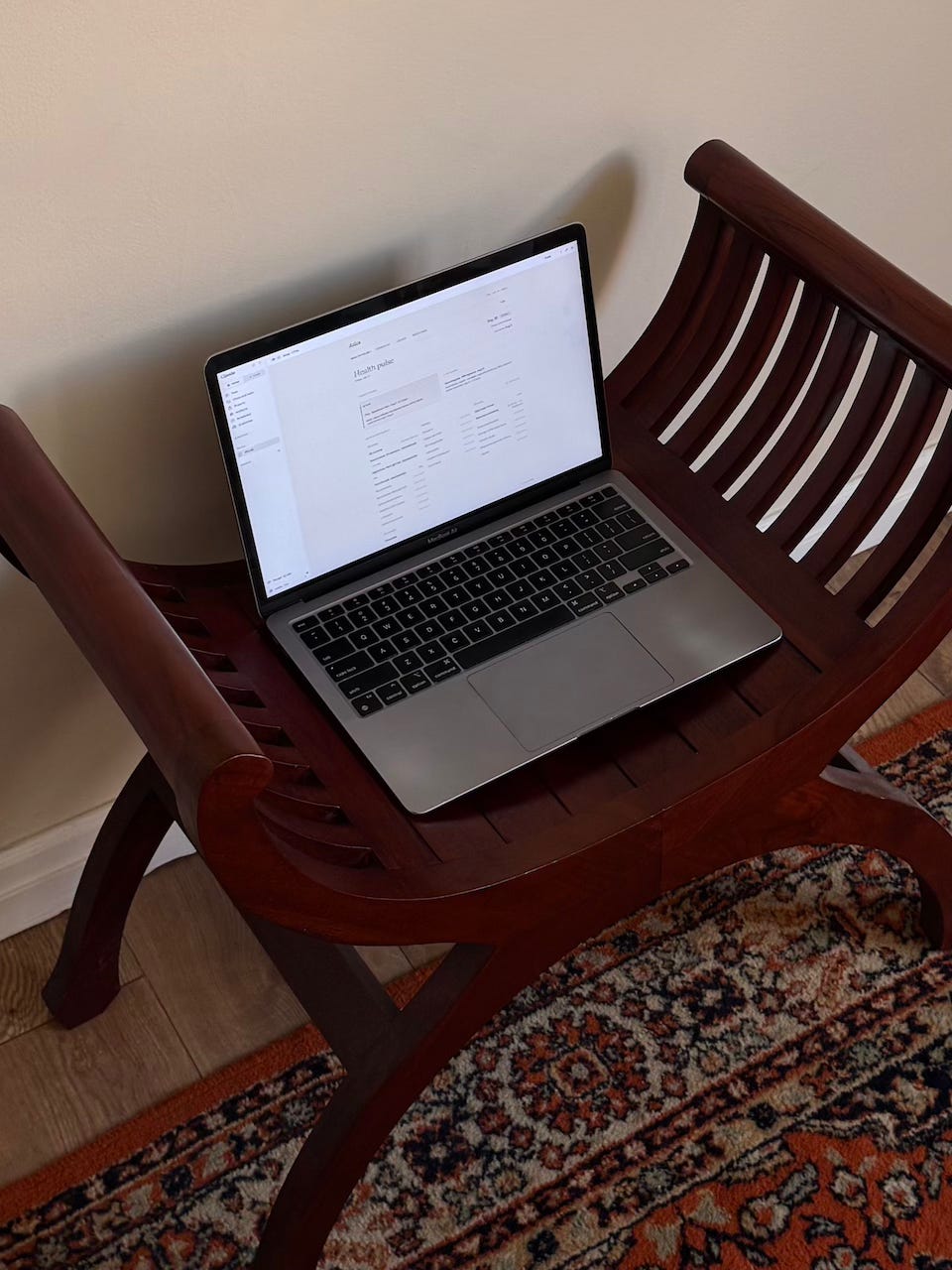
If everyone in 2026 is a coder, I am a luddite. And yet, I turned to Claude. I had it code me an artifact that could ingest, preserve, and demystify my entire medical records and dynamic treatment plan. What it created was a single, self-contained HTML file where all of my data is stored, which I keep open in a Claude tab on my browser...
Subscribe to Magasin to unlock the rest.
Become a paying subscriber of Magasin to get access to this post and other subscriber-only content.
A subscription gets you:
| High Touch, an aesthetics and longevity newsletter by Magasin | |
| Private access to subscriber-only sales | |
| Early viewing of shopping spreadsheets |
| ||||||||||

