Responding to a growing yearning for more restorative spaces in nightlife, Overflow is creating dream-like utopias on the dancefloor. Writer Megan Wallace speaks to cofounders Aoife McGuinness and Jessie Dymond Barber.
Berlin clubbers aren’t known for taking breaks. Parties can span days: no sleep, no food, no going home. Following the isolation of the pandemic and the relentless hedonism that followed once lockdown lifted, Aoife McGuinness and Jessie Dymond Barber, the founders of Overflow, observed how some people in the nightlife scene were beginning to burn out. Overflow was born from this weary atmosphere. It was “what we felt Berlin needed,” McGuinness says. “And then, over time, it evolved into its own living and breathing entity that we’re now mothering.”
McGuinness and Dymond Barber launched Overflow in 2023, having been embedded in the Berlin scene for years prior. The collective emerged from months of introspection and conversations with fellow ravers about what they felt was missing from nightlife.
But long before, McGuinness had a lightbulb moment at a squat rave in Lichtenberg. “One of the dance floors was in a big toilet and we were all dancing with our shoes off,” she recalls. “At some point, I get up on the sink and a friend washes my feet. I was like, ‘Oh my god! Foot baths at the rave, this is amazing!’”
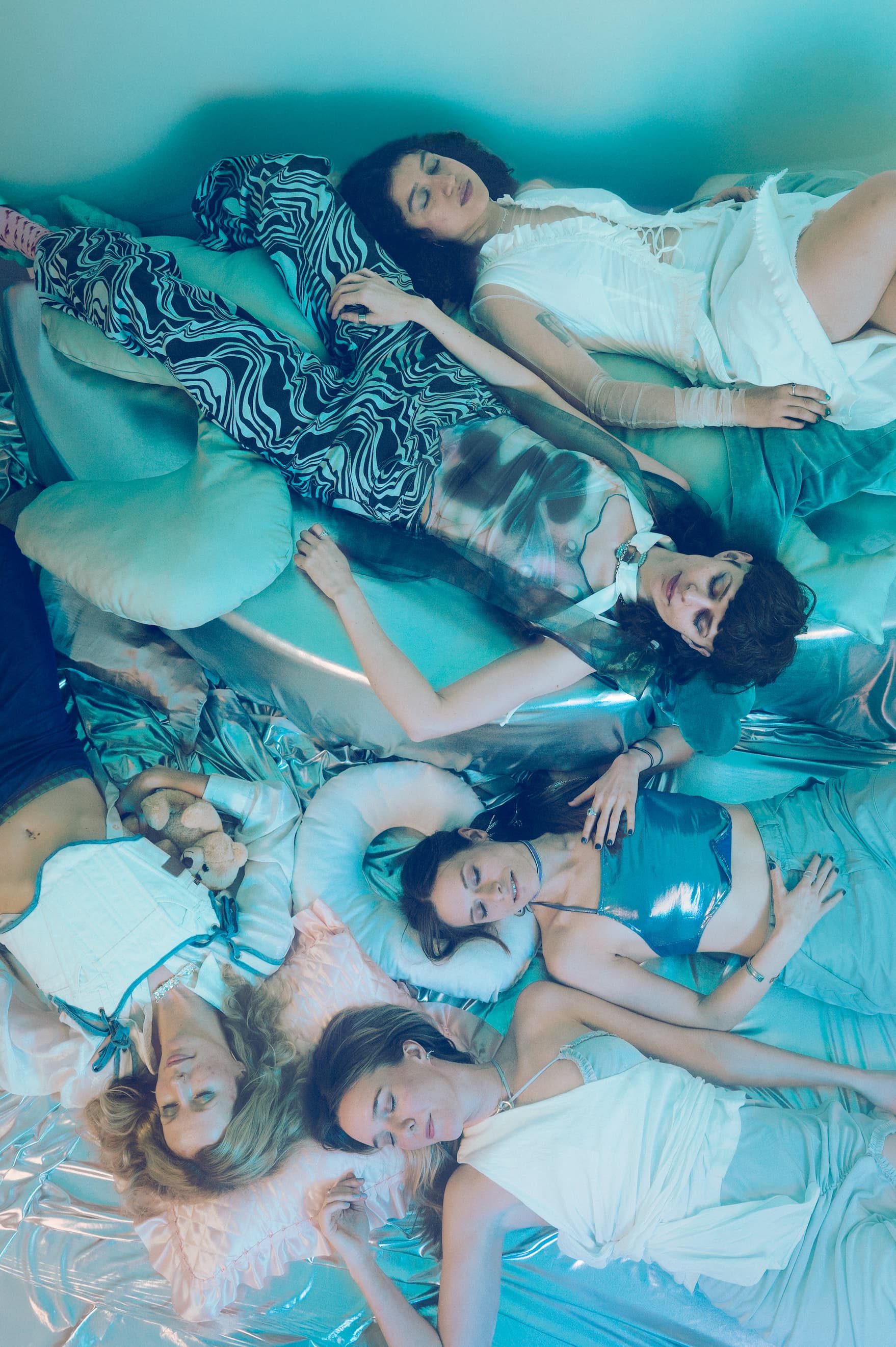
Overflow is best known for their sensory rave spas: day-time gatherings, generally on a Sunday, which encompass a roster of calming DJ sets and live music alongside comforting food, hot drinks, and gentle, atmospheric lighting. What the “spa” might encompass varies from venue to venue, but could include a sauna, foot baths, aromatherapy, or whatever else might be possible in the space. Another strand of programming is somatic raves, essentially movement workshops guided by sound.
These happenings can function as either standalone events or afterparties, the latter providing a cushioned descent from a weekend of partying. It’s an opportunity to recalibrate your mind and body. “In Berlin, there’s never any start, never any end,” McGuiness adds. “The party almost never finishes. For us, it was really important to give people a soft landing.”
Over time, Overflow has become an important outlet for a mix of individuals looking for outlets to heal after hedonism, as well as spaces that are softer, immersive, and built with inclusivity in mind.
“We attract a really vibrant, culturally aware, sensory sensitive community,” Dymond Barber explains. “It’s open to all, but we really feel it’s embraced by FLINTA+ individuals, ravers that are curious about a healthier lifestyle, and creative people that feel alienated by competitive wellness spaces.
“There are also a lot of music heads, people that love dance culture, sound, and night-time aesthetics, but who are also looking to prioritise their mental health and physical safety. Plus, there’s people interested in mutual care and meaningful social connections.”
While the collective has cultivated an intentional community in their home city, they’ve also staged satellite events at Belgium’s Horst. The revered festival, which takes place just north of Brussels, offered Overflow an opportunity to expand their reach while providing space for wellbeing within the notoriously overstimulating atmosphere of a festival.
“In Berlin we’re surrounded by our core community, but stepping outside that ecosystem for festivals allows us to reach a much broader cross-section of people,” Dymond Barber adds. “Visitors from completely different scenes walk into the space, people who wouldn't usually seek out this kind of work, and leave deeply shifted and filled with gratitude.”
As the cofounders look to the future, they’re contemplating how to encourage shifts in the scene that will travel beyond Overflow. One of the ways they intend to help push things forward is through Club Care, a new initiative exploring the infrastructure of care in nightlife through sensory, somatic, metabolic, and collective elements.
Part of Club Care is inspired by the collective’s original research, which explored the different factors that influence our wellbeing after a night on the dancefloor. “Things like skipping sleep all play a part,” McGuinness explains. “But one of the things that had the biggest impact on how people felt after the rave is whether they had a transformative experience on the dancefloor. That cathartic release of emotions is so powerful, so we really want to think about how the infrastructure of nightlife can better support that.”
Now, the collective wants to go macro. How can nightlife environments centre transcendence? And how can Overflow be a conduit for sharing and exchanging this knowledge? “We want to start bringing these conversations together,” McGuinness says. “To go beyond the individual and into the collective and structural.” For both founders it’s a case of challenging the status quo, and encouraging dancers to embrace the life-altering power of the dancefloor.
Learn more about Overflow via Instagram, and sign up for info about their future events here